Heavy Periods: 7 Warning Signs to Never Ignore
Women’s Health, Periods, Heavy Bleeding
Heavy Periods Are Not Normal: 7 Warning Signs Women Should Never Ignore
Many women grow up believing that painful, heavy periods are just “part of being a woman.” In reality, consistently heavy bleeding can be a sign that something deeper is going on with your health. Understanding what is normal—and what is not—can help you protect your body, your energy, and your long-term wellbeing.
Heavy Periods Are Not “Just How You Are”
A normal period looks different for every woman, but constant flooding, passing large clots, or bleeding for many days in a row is not normal. Doctors use the term menorrhagia for periods that are so heavy they interfere with your daily life or cause anemia (low red blood cells).
Heavy periods can be linked to conditions such as fibroids, endometriosis, hormonal imbalances, thyroid issues, bleeding disorders, or even pregnancy‑related problems. While these causes vary in seriousness, they all deserve proper medical attention. Ignoring the signs can lead to exhaustion, fertility challenges, and a poorer quality of life—none of which you should simply “put up with.”
💡 Key Reminder: If your period is regularly disrupting work, school, sleep, or social plans, that alone is a reason to talk to a healthcare professional.
7 Warning Signs Women Should Never Ignore
1. Soaking Through a Pad or Tampon in Under an Hour
If you routinely bleed through a pad or tampon every hour—or need to double up with both—your flow is considered very heavy. This level of bleeding can quickly deplete your iron stores and may signal fibroids, hormonal issues, or other underlying conditions that need evaluation.
2. Passing Large Blood Clots
Small clots can be normal, but clots larger than a quarter—especially when frequent—are a red flag. They indicate that blood is pooling and not flowing smoothly, which can be linked to fibroids, polyps, or other structural changes in the uterus.
3. Bleeding Longer Than 7 Days
Most periods last between three and seven days. If your bleeding regularly continues beyond a week—or stops and then starts again heavily—you may be experiencing abnormal uterine bleeding. This pattern is worth discussing with your doctor, particularly if it has changed from what used to be typical for you.
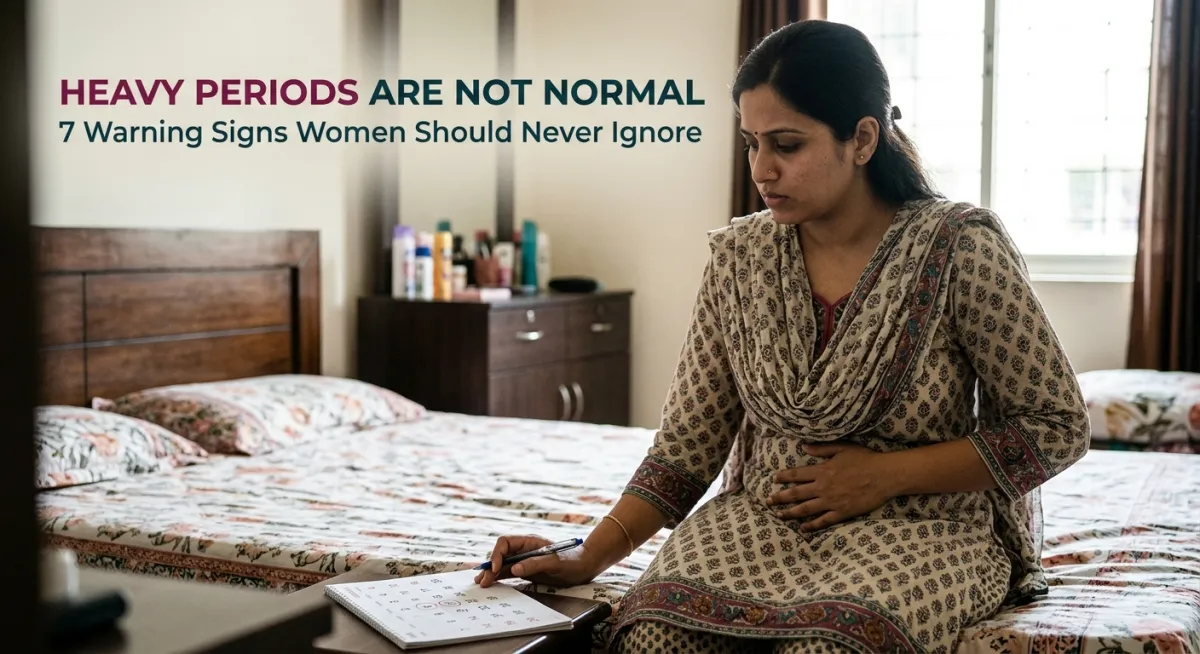
Tracking your cycle helps doctors quickly spot changes and possible causes of heavy bleeding.
4. Needing to Change Protection During the Night
Waking up multiple times to change pads or tampons—or frequently leaking onto sheets—is another sign your flow is too heavy. Nighttime flooding is not something you just have to accept; it may indicate a condition that can be treated with medication, hormones, or other options your doctor can recommend.
5. Severe Cramps That Don’t Respond to Usual Pain Relief
Cramps are common, but pain that makes you double over, miss work, or rely on strong painkillers every month is not normal. Extremely painful periods, especially when combined with heavy bleeding, can point to endometriosis, adenomyosis, or other pelvic conditions that need proper assessment.
6. Symptoms of Anemia: Exhaustion, Dizziness, or Shortness of Breath
Heavy periods can slowly drain your iron levels, leaving you feeling constantly tired, weak, or out of breath climbing stairs. You might also notice pale skin, headaches, or heart palpitations. These are classic signs of iron‑deficiency anemia, a common but serious consequence of untreated heavy bleeding.
7. Bleeding Between Periods, After Sex, or After Menopause
Any unexpected bleeding—spotting between periods, bleeding after intercourse, or any vaginal bleeding after menopause—should be checked promptly. While the cause may be minor, irregular bleeding patterns can also be early signs of infections, hormonal changes, or, rarely, precancerous or cancerous changes in the uterus or cervix.
⚠️ When to Seek Urgent Help: Go to emergency care if you are soaking through pads or tampons every hour for several hours, feel faint, have chest pain, or struggle to breathe. These can be signs of severe blood loss.
#heavyperiods #womenshealth #menstruationmatters #endometriosisawareness #fibroids


