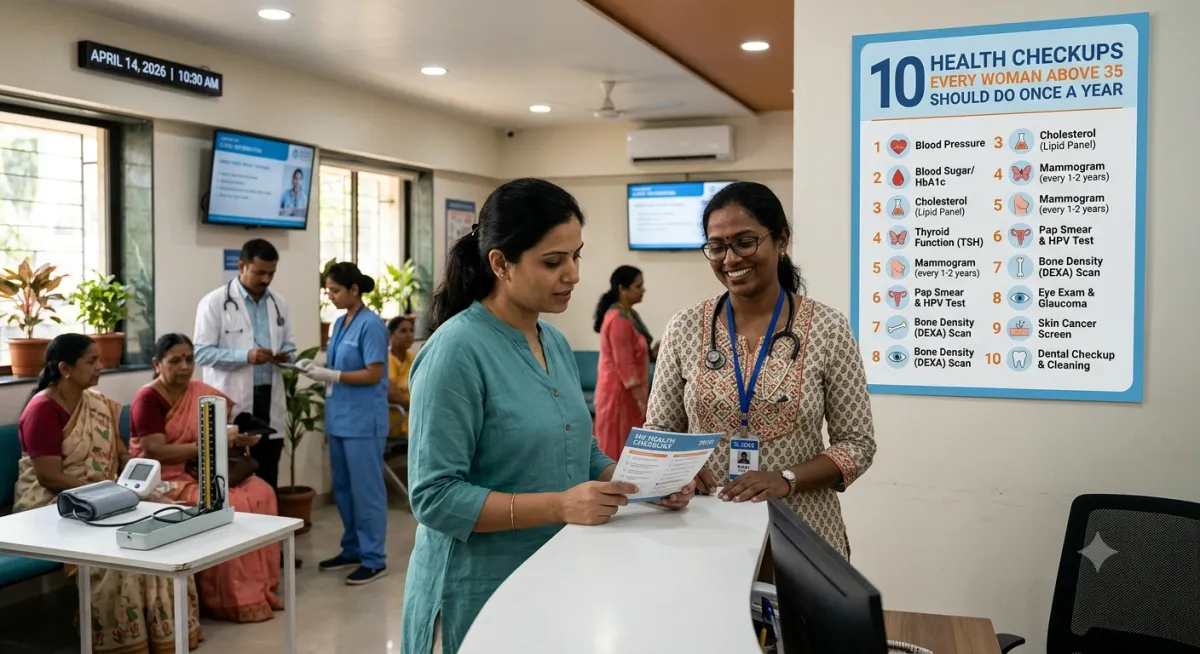
10 Health Checkups Every Woman Above 35 Should Do Once a Year
10 Health Checkups Every Woman Above 35 Should Do Once a Year
After 35, women often start noticing changes in weight, energy levels, periods, mood, hormones, skin, sleep, and overall stamina. Many women ignore these changes because they are busy taking care of family, work, and home. But yearly health checkups can help detect problems early, before they become serious.
A yearly women’s health checkup is not only for illness. It is a preventive step to understand your body better.
1. Complete Blood Count
A CBC test helps check hemoglobin, infection markers, and general blood health. Many women have anaemia without realizing it, especially if they experience heavy periods, weakness, fatigue, or dizziness.
2. Blood Sugar Test
Fasting blood sugar and HbA1c help detect diabetes or prediabetes early. Screening becomes especially important after 35 if there is weight gain, PCOS, family history of diabetes, previous gestational diabetes, or sedentary lifestyle. The USPSTF recommends diabetes screening for adults aged 35–70 who are overweight or obese.
3. Blood Pressure Check
High blood pressure may not show clear symptoms, but it can affect the heart, kidneys, brain, and pregnancy planning. A yearly BP check is a simple but important preventive step.
4. Thyroid Profile
Thyroid imbalance is common in women and can cause weight changes, tiredness, hair fall, irregular periods, mood changes, and fertility issues. A thyroid test helps detect the problem early.
5. Lipid Profile
A lipid profile checks cholesterol and triglyceride levels. After 35, especially with weight gain, diabetes, BP, family history, or low physical activity, heart-health screening becomes important.
6. Pap Smear / HPV Test
Cervical cancer screening is one of the most important tests for women. For women aged 30–65, cervical screening may be done through Pap smear every 3 years, HPV test every 5 years, or co-testing every 5 years, depending on the doctor’s advice.
7. Breast Examination / Mammography Advice
Women should get a breast examination and discuss mammography timing with their doctor. Routine mammography is generally recommended from age 40 for average-risk women, while women with family history or high-risk factors may need earlier screening.
8. Pelvic Examination and Sonography
A pelvic checkup and ultrasound can help detect fibroids, ovarian cysts, endometrial thickness issues, PCOS-related changes, and other gynecological concerns. This is especially important if periods are heavy, painful, irregular, or if there is pelvic pain.
9. Liver, Kidney and Urine Tests
Liver function, kidney function, and urine tests help check internal health, infections, dehydration, kidney strain, and other hidden issues. These tests are useful even when symptoms are mild.
10. Vitamin D, Vitamin B12 and Bone Health Review
Low Vitamin D and B12 can cause fatigue, weakness, body pain, numbness, low mood, and poor bone health. Women above 35 should also discuss calcium levels, bone strength, and lifestyle habits with their doctor.
Women often delay their own health checkups until symptoms become serious. That delay is the real problem. A yearly checkup helps detect anaemia, thyroid imbalance, diabetes, BP, cervical issues, breast concerns, fibroids, and hormonal problems at the right time.
At Matrutvam Hospital, women can get preventive health guidance, gynecology consultation, screening support, and expert care in a comfortable, women-first environment.
Matrutvam Hospital—All-round care, just for her.
#WomenHealthCheckup #PreventiveCare #MatrutvamHospital #WomenAbove35 #GynecologyCare


