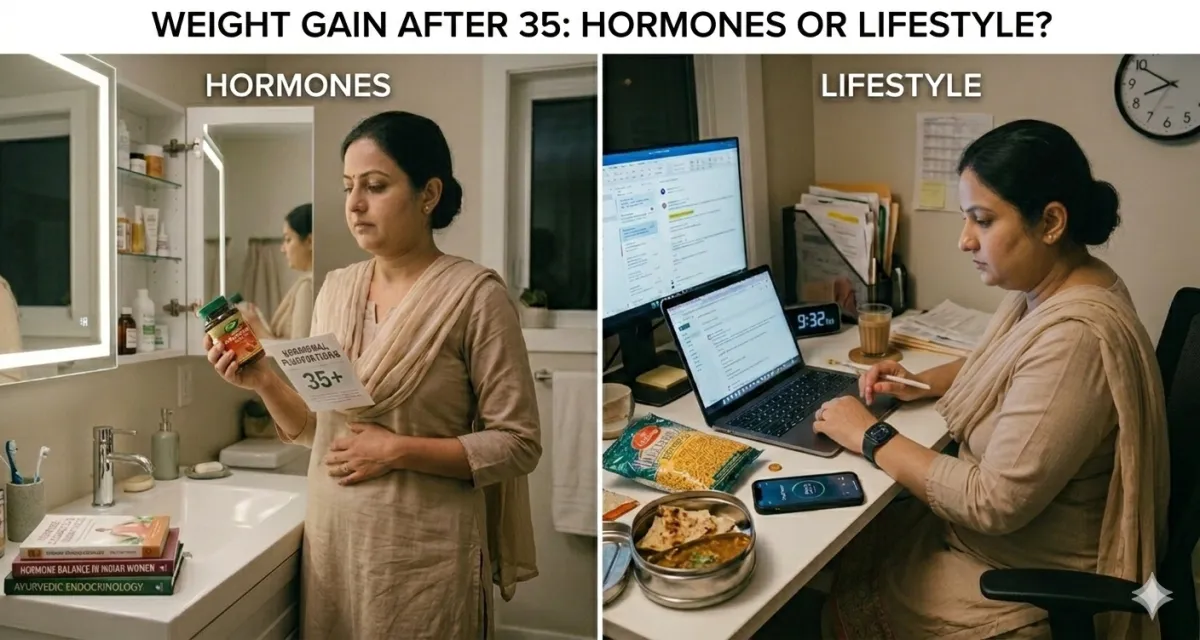
Weight Gain After 35: Hormones or Lifestyle?
If the same diet and routine that worked in your 20s suddenly stops working after 35, you’re not imagining it. Many women notice stubborn weight gain—especially around the abdomen—despite eating “normally.”
The real question is, is it hormones, or is it lifestyle?
The answer is usually both.
1️⃣ Hormonal Changes Start Earlier Than Menopause
Around the mid-30s, subtle hormonal shifts begin. Estrogen and progesterone levels fluctuate, even if cycles are regular. These changes can:
Slow metabolism
Increase fat storage (especially abdominal fat)
Increase cravings
Affect insulin sensitivity
Lower estrogen levels influence where fat is stored — often shifting from hips and thighs to the belly.
2️⃣ Slower Metabolism Is Real
After 30–35, muscle mass gradually declines if not actively maintained. Muscle burns more calories than fat. So when muscle decreases:
Calorie burn reduces
Fat accumulation increases
Weight loss becomes harder
Without strength training, the body composition changes even if the scale doesn’t move drastically.
3️⃣ Stress & Cortisol Play a Bigger Role
Women in their mid-30s often juggle:
Career growth
Parenting
Financial responsibilities
Household management
Chronic stress increases cortisol levels. Elevated cortisol:
Promotes belly fat
Triggers sugar cravings
Disrupts sleep
Slows metabolism
Stress weight is hormonal — but lifestyle-triggered.
4️⃣ Sleep Deprivation Adds Fuel to the Fire
Poor sleep affects hunger hormones:
Ghrelin (increases appetite)
Leptin (signals fullness)
Less sleep = more cravings + reduced fat burning.
Many women underestimate how much sleep quality impacts weight regulation.
5️⃣ Thyroid & Insulin Resistance
After 35, the risk of:
Hypothyroidism
Insulin resistance
PCOS-related weight gain
becomes more common.
Symptoms like fatigue, hair fall, irregular cycles, and unexplained weight gain should not be ignored.
So, Is It Hormones or Lifestyle?
Here’s the truth:
Hormones may create the tendency.
Lifestyle determines how strongly it shows.
A sedentary routine, high stress, low protein intake, and poor sleep amplify hormonal weight gain.
What Actually Works After 35?
✔ Strength training 3–4 times per week
✔ Higher protein intake
✔ Managing stress levels
✔ 7–8 hours of quality sleep
✔ Regular hormonal and thyroid screening
✔ Reducing refined sugars
Crash diets don’t fix hormonal weight gain. They often worsen it.
When Should You Consult a Doctor?
Seek medical evaluation if you experience:
Rapid weight gain
Irregular periods
Severe fatigue
Hair thinning
Mood swings
Persistent bloating
A proper check-up may include hormonal tests, thyroid profile, insulin levels, and metabolic assessment.
At Matrutvam Women’s Superspecialty Hospital, women-centric multispecialty care ensures that weight concerns are evaluated holistically — not just as a cosmetic issue, but as a metabolic and hormonal signal.
Because after 35, weight gain isn’t just about calories. It’s about understanding your body’s changing rhythm — and responding intelligently.
#WomenHealth #WeightGainAfter35 #HormonalHealth #MetabolicHealth #MatrutvamWomenHospital


