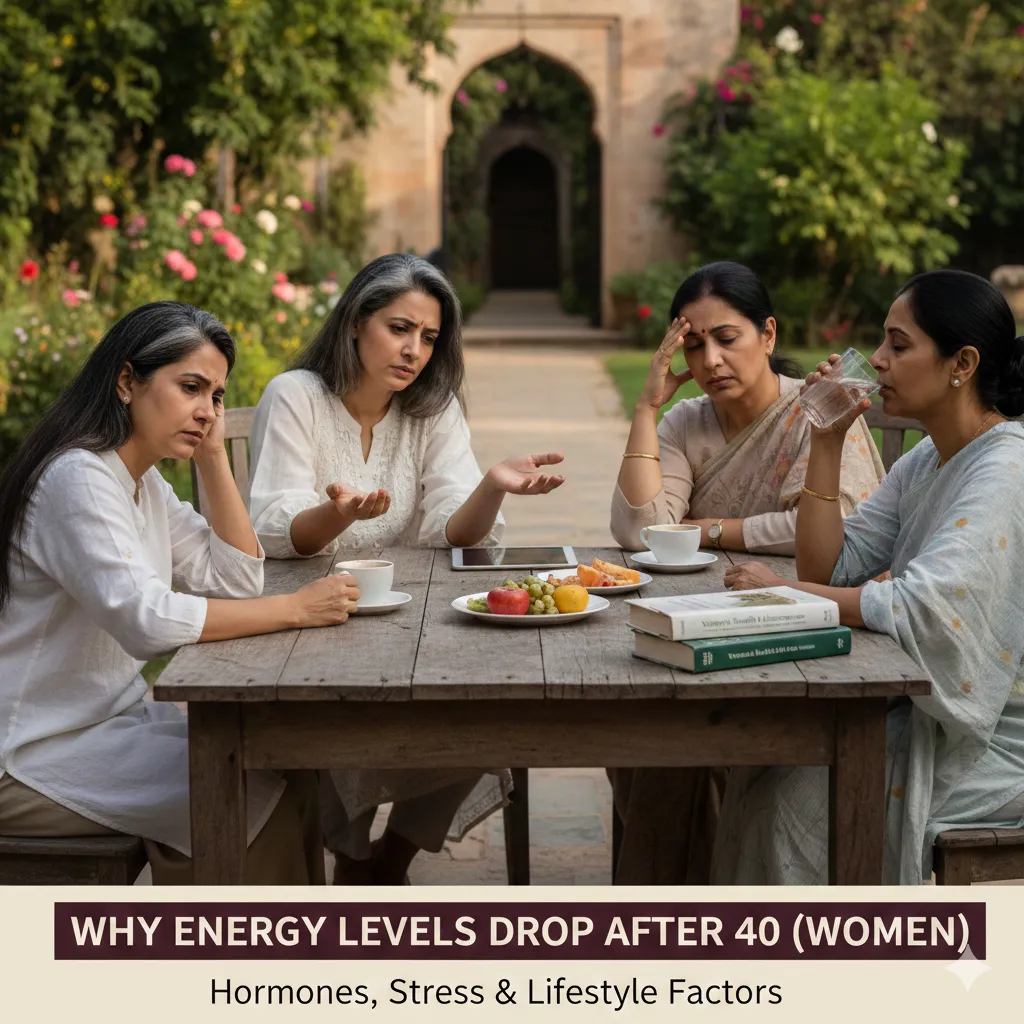
Why Energy Levels Drop After 40
Why Energy Levels Drop After 40
Many women notice a subtle but persistent shift after 40—the stamina isn’t the same, recovery takes longer, and fatigue feels deeper than “just a long day.” It’s not laziness. It’s biology, lifestyle load, and hormonal transition intersecting at once.
Let’s break it down clearly.
1️⃣ Hormonal Shifts Begin Earlier Than You Think
After 40, estrogen and progesterone levels start fluctuating as the body gradually approaches perimenopause. These hormones don’t just regulate periods — they influence:
Energy production
Sleep quality
Mood stability
Muscle mass
Metabolism
When estrogen dips, women may experience:
Daytime fatigue
Brain fog
Poor sleep
Reduced motivation
Even if periods are regular, hormonal instability can already be affecting energy levels.
2️⃣ Sleep Quality Quietly Declines
You may still be sleeping 7–8 hours — but not deeply.
Hormonal changes can:
Disrupt REM cycles
Increase night awakenings
Trigger night sweats
Cause anxiety-driven insomnia
Less deep sleep = less cellular recovery = constant tiredness.
3️⃣ Slower Metabolism
After 40:
Muscle mass naturally declines
Fat storage increases
Basal metabolic rate reduces
This means the body burns energy less efficiently. Without strength training and protein intake, fatigue becomes more noticeable.
4️⃣ Nutrient Deficiencies Become Common
Iron, Vitamin D, Vitamin B12, and thyroid imbalances are extremely common in women over 40.
Symptoms often include:
Low stamina
Hair thinning
Mood changes
Weight gain
Brain fog
These are frequently ignored or blamed on “stress.”
5️⃣ Emotional & Mental Load
Women in their 40s are often balancing:
Career growth
Teenagers or young children
Aging parents
Household management
Chronic mental load contributes to adrenal fatigue patterns and burnout, amplifying physical exhaustion.
6️⃣ Reduced Physical Activity
Joint stiffness, early bone density decline, or minor pain can reduce activity levels. Less movement leads to:
Lower oxygen circulation
Reduced muscle endurance
Decreased energy production
It becomes a cycle: tired → less active → more tired.
When Should You See a Doctor?
Persistent fatigue is not normal and should not be dismissed if it lasts more than a few weeks.
Seek evaluation if you notice:
Sudden drop in energy
Heavy or irregular periods
Rapid weight changes
Hair fall
Sleep disturbances
Mood instability
A proper assessment may include:
Hormonal profile
Thyroid function test
Iron & Vitamin levels
Bone density screening
How to Restore Energy After 40
✔ Strength training at least 3 times a week
✔ Protein-rich balanced diet
✔ Vitamin screening
✔ Hormonal evaluation if symptoms persist
✔ Stress management & quality sleep hygiene
✔ Regular gynecology consultation
Energy loss after 40 isn’t inevitable—but ignoring it is a mistake.
At Matrutvam Women’s Superspecialty Hospital, care goes beyond symptom management. With women-first multispecialty expertise and a supportive environment, the focus is on restoring strength, balance, and long-term well-being.
Because fatigue shouldn’t define this phase of your life—empowerment should.
#WomenHealth #After40Health #MenopauseCare #HormonalHealth #MatrutvamWomenHospital


