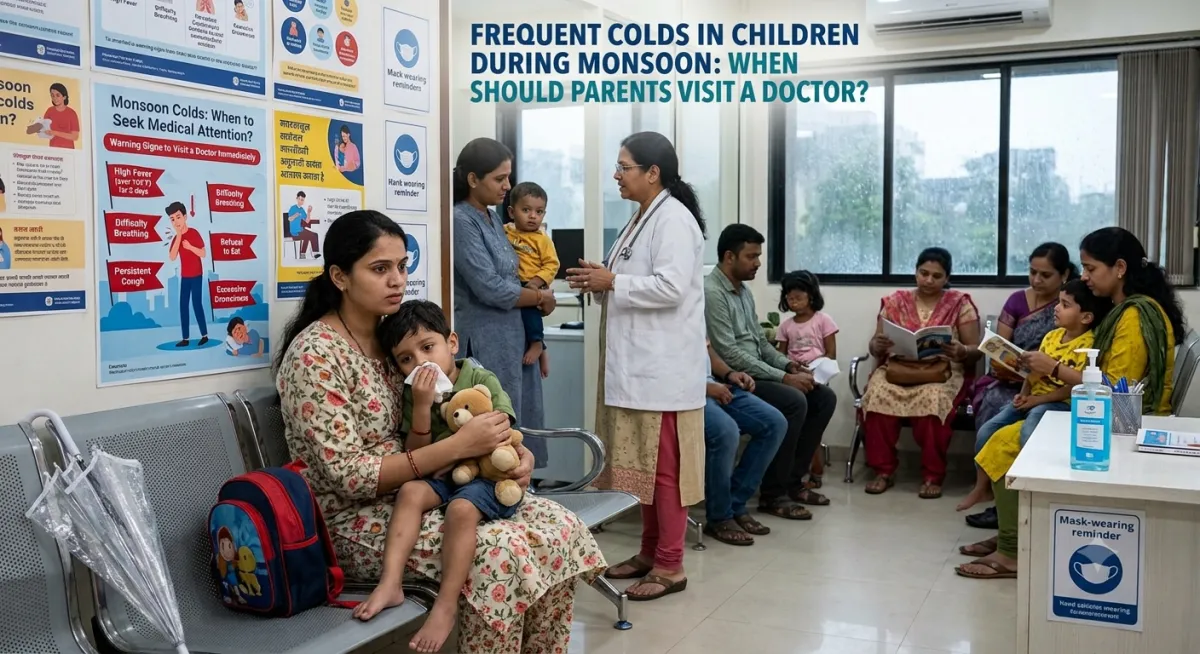
Frequent Colds in Children During Monsoon: When Should Parents Visit a Doctor?
Frequent Colds in Children During Monsoon: When Should Parents Visit a Doctor?
Monsoon is a season when many children repeatedly suffer from cold, cough, runny nose, throat irritation, and fever. Because of changing weather, damp surroundings, school exposure, and increased viral infections, children may fall sick more often during this period.
Most colds are viral and usually improve with rest, fluids, steam inhalation, and proper care. But parents should know the difference between a simple cold and a warning sign that needs a pediatrician’s attention.
Why Do Children Catch Colds Frequently During Monsoon?
Children have developing immunity, so they are more likely to catch viral infections. During monsoon, children also spend more time indoors, where infections can spread faster through coughing, sneezing, shared toys, school benches, and close contact.
A mild cold with sneezing, watery nose, slight cough, and low-grade fever is usually not dangerous. But if symptoms are severe, repeated, or not improving, parents should not ignore them.
What Parents Can Do at Home
For a mild cold, parents can support recovery with simple care:
Give plenty of fluids.
Let the child rest properly.
Keep the child away from cold drinks and unhygienic food.
Use saline drops for blocked nose if advised.
Maintain hand hygiene.
Keep the child’s clothes dry.
Avoid self-medication, especially antibiotics.
Cold and cough medicines should not be given casually to young children. The American Academy of Pediatrics advises that cough and cold medicines are not established as safe and effective for children under 6.
When Should Parents Visit a Doctor?
Parents should consult a pediatrician if the child has:
Fever lasting more than 2–3 days
High fever
Fast or difficult breathing
Wheezing or whistling sound while breathing
Severe cough disturbing sleep or feeding
Chest pain
Ear pain or ear discharge
Repeated vomiting
Poor feeding
Reduced urination
Unusual sleepiness or weakness
Cold and cough lasting more than 7–10 days
Symptoms improving first, then suddenly worsening again
Breathing difficulty, wheezing, rib cage pulling in while breathing, bluish lips, or extreme tiredness need urgent medical care.
Special Care for Babies
For newborns and infants, parents should be extra careful. A small baby with fever, poor feeding, breathing difficulty, or unusual dullness should be shown to a doctor quickly. Babies cannot explain discomfort, so parents should watch their breathing, feeding, crying pattern, urine output, and activity level closely.
Do Frequent Colds Mean Weak Immunity?
Not always. Many children get repeated colds, especially when they start school or daycare. But if the child is falling sick very frequently, losing weight, having repeated chest infections, needing antibiotics often, or taking too long to recover, a pediatrician should evaluate the child properly.
Final Word
Frequent colds during monsoon are common, but they should not be ignored when symptoms are severe or persistent. Early pediatric consultation can help detect complications like chest infection, ear infection, allergy, asthma, or viral fever.
At Matrutvam Juniors, our pediatric care team helps parents understand their child’s symptoms and provides timely care for cold, cough, fever, infections, and monsoon-related health concerns.
Matrutvam Juniors — Caring for your child’s health, every season.
#MonsoonChildCare #KidsHealth #FrequentColdInChildren #MatrutvamJuniors #PediatricCare


