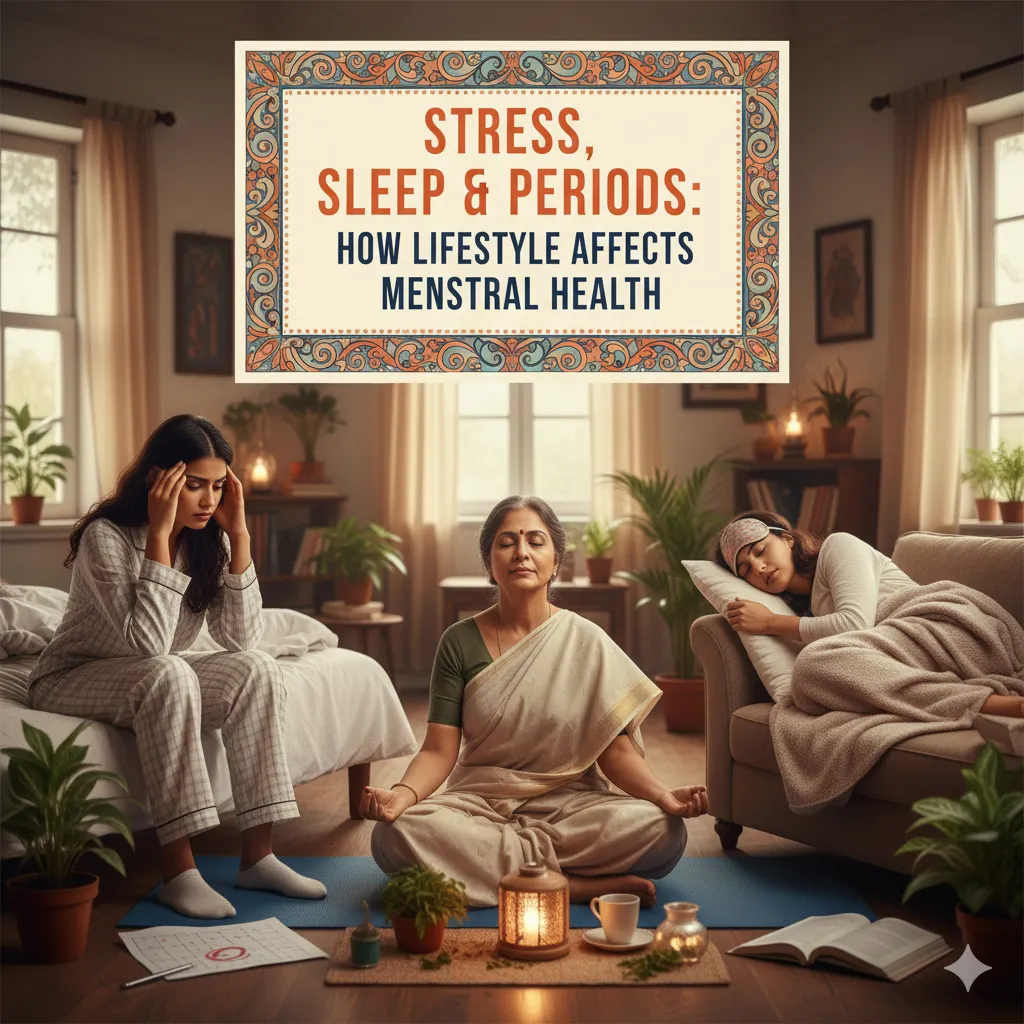
Stress, Sleep & Periods: How Lifestyle Affects Menstrual Health
Stress, Sleep & Periods: How Lifestyle Affects Menstrual Health
Periods are often seen as something that “just happens” every month. But in reality, your menstrual cycle is closely connected to your daily lifestyle—especially stress levels and sleep habits.
Many women experience delayed periods, irregular cycles, or painful cramps and assume it’s normal. Sometimes it is. But many times, your body is trying to tell you something.
Let’s understand how stress and sleep quietly influence menstrual health.
The Connection Between Mind, Body & Periods
Your menstrual cycle is controlled by hormones. These hormones are sensitive—not just to physical health, but also to emotional and mental well-being.
When stress increases or sleep reduces, your body prioritizes survival over balance. As a result, hormonal signals that regulate periods can get disturbed.
How Stress Affects Your Periods
Stress is not only emotional pressure—it can come from:
Work or study pressure
Family responsibilities
Financial worries
Constant multitasking
Emotional exhaustion
When stress stays for a long time:
Periods may become late or irregular
Bleeding may become heavier or lighter
Cramps may feel more painful
PMS symptoms like mood swings and fatigue may increase
Your body produces a hormone called cortisol during stress. High cortisol can interfere with the hormones responsible for ovulation, which directly affects your cycle.
Why Sleep Is More Important Than You Think
Sleep is the time when your body repairs and balances itself.
Poor sleep or late nights can:
Delay ovulation
Disturb hormone release
Increase fatigue during periods
Worsen cramps and bloating
Women who sleep less than 6–7 hours regularly often notice changes in their cycle, even if they eat well and exercise.
Lifestyle Habits That Can Disrupt Menstrual Health
Some everyday habits that silently affect periods:
Irregular sleep timings
Skipping meals or extreme dieting
Fast food
Lack of physical activity
Constant screen time and mental overload
Over time, these habits create hormonal imbalance, which is reflected in your menstrual cycle.
Small Changes That Make a Big Difference
You don’t need drastic changes. Simple, consistent habits help:
Try to sleep and wake up at the same time daily
Include light exercise or walking
Eat regular, balanced meals
Practice stress-relief activities like deep breathing or quiet time
Listen to your body—rest when needed
Your periods often improve when your lifestyle becomes more balanced.
When Should You Consult a Doctor?
Lifestyle changes help, but medical guidance is important if you notice:
Periods missing for 2–3 months
Severe pain affecting daily life
Very heavy bleeding
Sudden cycle changes without clear reason
Ignoring symptoms may delay diagnosis of underlying issues.
At Matrutvam, we listen beyond symptoms.
At Matrutvam Women’s Hospital, we believe menstrual health is not just about treating cycles—it’s about understanding the woman behind the symptoms.
With expert care, respectful listening, and holistic guidance, we help women regain balance and confidence in their health journey.
#MenstrualHealth #StressAndPeriods #SleepAndHormones #HealthyCycle #WomensWellness


