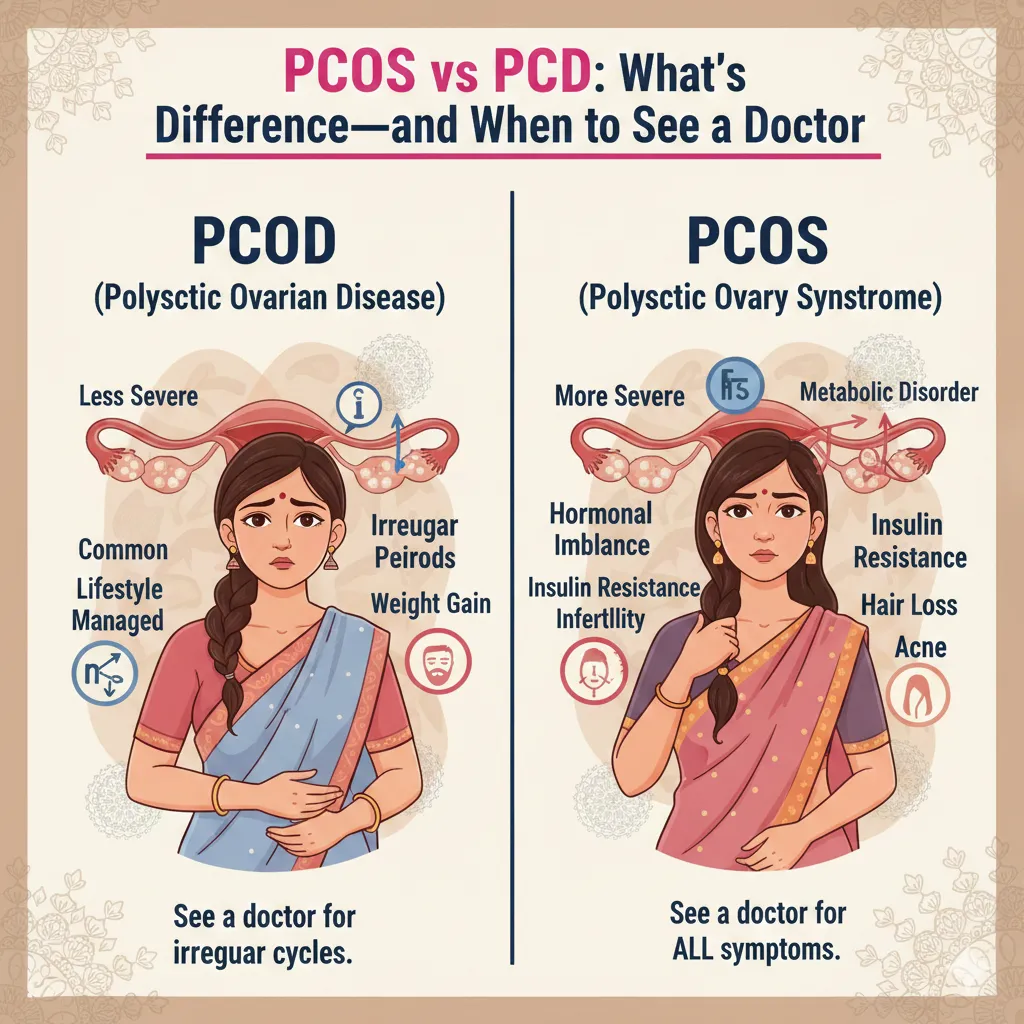
PCOS vs PCOD: What’s the Difference—and When to See a Doctor?
PCOS vs PCOD: What’s the Difference—and When to See a Doctor?
If you’ve ever been told you have PCOD by one doctor and PCOS by another, you’re not alone. These terms are often used interchangeably—but they’re not the same. Understanding the difference matters, because it affects how seriously you take symptoms, what tests you need, and how your treatment plan should look.
Let’s break it down clearly.
First: What do PCOD and PCOS mean?
PCOD (Polycystic Ovarian Disease)
PCOD is a hormonal imbalance where the ovaries may release immature or partially mature eggs. Over time, these can appear as multiple small cyst-like follicles on ultrasound.
It’s usually linked to lifestyle factors like weight gain, insulin resistance, stress, and poor sleep—though genetics can play a role too.
PCOD is common and often manageable with lifestyle changes + basic medical support.
PCOS (Polycystic Ovary Syndrome)
PCOS is a metabolic + hormonal syndrome, often more complex. It can involve:
higher androgens (male hormones)
insulin resistance
irregular ovulation
inflammation
higher long-term risks (like diabetes)
PCOS is typically considered more severe than PCOD because it affects the whole body—not just the ovaries.
PCOS vs PCOD: The real difference (simple + honest)
1) Severity
PCOD: Often milder, many women manage it well with lifestyle correction and cycle support.
PCOS: Can be more stubborn; requires consistent monitoring and a structured plan.
2) Ovulation and fertility
PCOD: Ovulation may happen, just irregularly.
PCOS: Ovulation can be significantly disrupted, making conception harder without proper treatment.
3) Metabolic impact
PCOD: May have mild insulin issues.
PCOS: Stronger association with insulin resistance, weight gain around the belly, and future diabetes risk.
4) Hormone pattern
PCOD: Hormones can be slightly off.
PCOS: Often shows high androgens → acne, facial hair, hair thinning, oily skin.
5) Long-term health risks
PCOS has a higher chance of:
Type 2 diabetes
high cholesterol
fatty liver
high blood pressure
endometrial thickening (if periods are very infrequent)
That doesn’t mean PCOD is harmless—it means PCOS needs tighter control.
Common symptoms of both PCOD and PCOS
You may notice:
irregular periods (late, missed, or very frequent)
acne or oily skin
hair fall or thinning
unwanted facial/body hair
weight gain (especially around waist)
difficulty getting pregnant
dark patches on neck/underarms (possible insulin resistance)
mood swings, anxiety, poor sleep, fatigue
Key truth: You don’t need every symptom to have PCOS/PCOD. Even “just irregular periods” is reason enough to get checked.
What causes PCOS/PCOD?
There isn’t one cause. It’s usually a combination of:
genetics (family history)
insulin resistance
weight fluctuations
stress + sleep disruption
sedentary lifestyle
hormonal imbalance
And no—this is not your fault. But it is your responsibility to treat it early, because ignoring it makes it harder later.
How doctors diagnose it (what you should expect)
At Matrutvam Hospital, a proper evaluation usually includes:
1) Detailed history
Cycle pattern, weight changes, acne/hair growth, fertility goals, lifestyle.
2) Ultrasound
To look for multiple follicles and ovarian volume.
3) Blood tests
Often includes:
LH, FSH
testosterone/androgens
prolactin, thyroid profile
fasting insulin / sugar, HbA1c
lipid profile (cholesterol)
Important: An ultrasound alone isn’t enough to label PCOS. PCOS is diagnosed using combined criteria—symptoms + labs + scan.
Treatment: what actually works (and what doesn’t)
There’s no one “PCOS pill” that fixes everything. Treatment depends on what your body is doing and what your goal is.
If your goal is: regular periods
cycle regulation medicines (doctor-guided)
lifestyle upgrades (weight, sleep, stress)
If your goal is: skin/hair symptoms
anti-androgen support (if needed)
acne management
nutrition-based hormone balancing
If your goal is: pregnancy
ovulation tracking
ovulation induction (if required)
fertility evaluation for both partners
IVF/IUI only if indicated (not as a default)
The non-negotiables (for both PCOD & PCOS)
consistent movement (even 30–45 min brisk walk helps)
protein-first meals
reduce high sugar + refined carbs
sleep discipline
stress management that’s realistic (not motivational quotes)
If you’re being sold only supplements without diagnosis and follow-up, that’s not treatment—that’s business.
#PCOS #PCOD #WomensHealth #HormonalHealth #MatrutvamHospital


