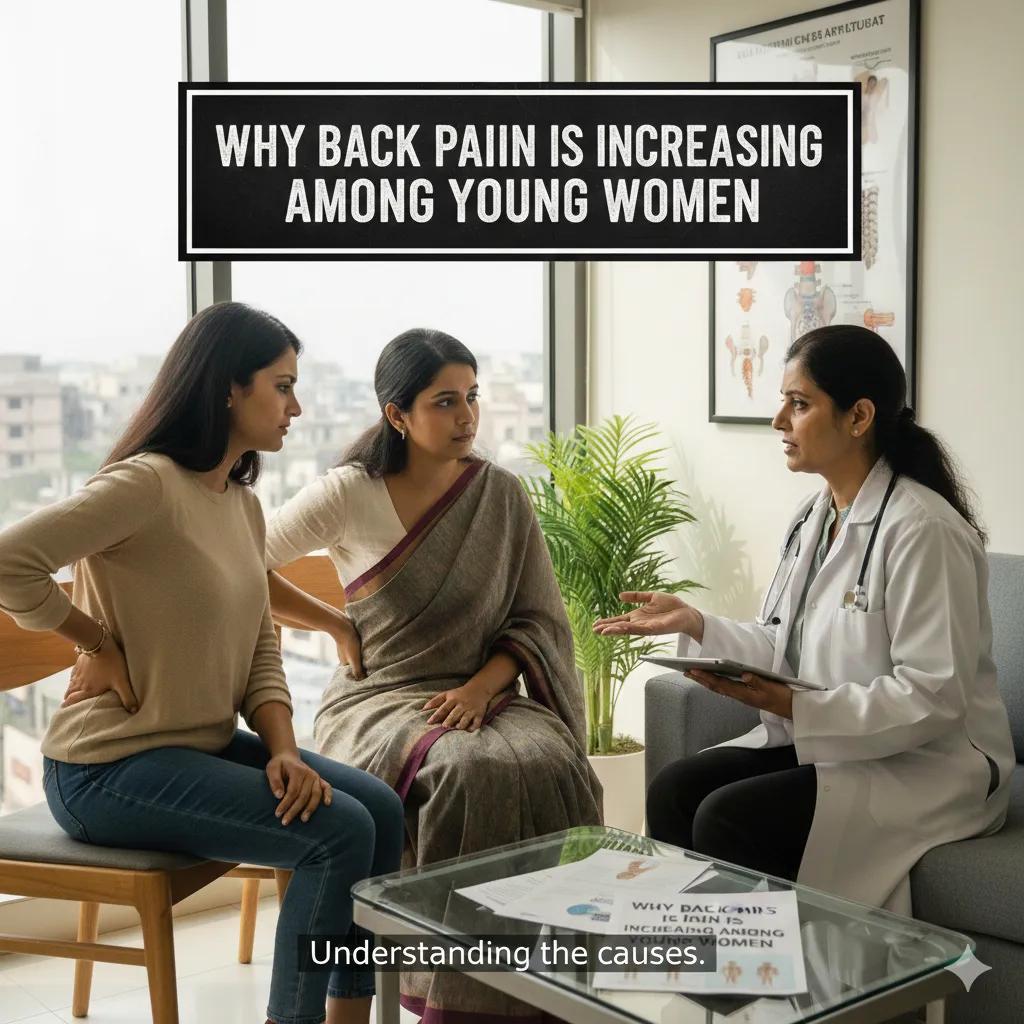
Why Back Pain Is Increasing Among Young Women
Why Back Pain Is Increasing Among Young Women
Back pain is no longer an age-related issue. Today, women in their 20s and 30s are increasingly experiencing persistent back discomfort — sometimes mild and ignored, sometimes severe enough to disrupt daily life. The bigger concern? Most assume it’s “just stress” or “normal tiredness.”
It’s not always normal.
At Matrutvam Women’s Superspecialty Hospital, a women-first healthcare institution built around comfort, dignity, and advanced medical expertise
Matrutvam - Brand Guidelines
, specialists are seeing a noticeable rise in young women seeking help for back-related concerns.
Let’s understand why this is happening.
1. Sedentary Lifestyle & Desk Jobs
Long hours on laptops, poor ergonomics, and minimal physical movement are major contributors.
Slouching while working
Working from bed or couch
Lack of lumbar support
Sitting 8–10 hours daily
Over time, this strains spinal muscles and weakens core support, leading to chronic lower back pain.
Your daily sitting posture may be doing more damage than you realize.
2. Weak Core & Lack of Strength Training
Many young women focus primarily on cardio for weight loss but ignore strength training.
A weak core results in:
Poor spinal stability
Increased pressure on the lower back
Faster muscle fatigue
Without muscular support, even routine activities like bending or lifting can trigger pain.
3. Hormonal Changes & Menstrual Health Issues
Hormonal fluctuations during the menstrual cycle can cause lower back pain. Conditions such as:
PCOS
Endometriosis
Severe menstrual cramps
can radiate discomfort toward the lower back.
If back pain consistently worsens during periods, it may not be a simple muscular issue. A gynecological evaluation becomes important.
4. Chronic Stress & Mental Load
Stress tightens muscles, especially around the neck, shoulders, and lower back.
Young women today juggle:
Career pressure
Household responsibilities
Social expectations
Digital burnout
Emotional stress often translates into physical tension. Over time, this leads to persistent discomfort.
5. Improper Footwear
High heels and unsupportive footwear shift body alignment. Regular use can gradually alter posture and increase spinal pressure.
Style without structural support impacts long-term spine health.
6. Vitamin Deficiencies
Vitamin D and calcium deficiencies are increasingly common in young women.
Low bone density and muscle weakness can silently contribute to recurring back pain — especially in women who:
Avoid sunlight
Follow restrictive diets
Have irregular eating habits
This often goes unnoticed until symptoms persist.
#BackPainInWomen #WomenHealthAwareness #SpineCare #HormonalHealth #MatrutvamHospital


